


High-precision motion systems are essential in modern automation, semiconductor manufacturing, medical technology, and advanced robotics. As these industries demand faster response times and tighter accuracy, optimizing actuator performance becomes a key engineering priority. Proper tuning and system design can significantly improve efficiency, stability, and lifespan.
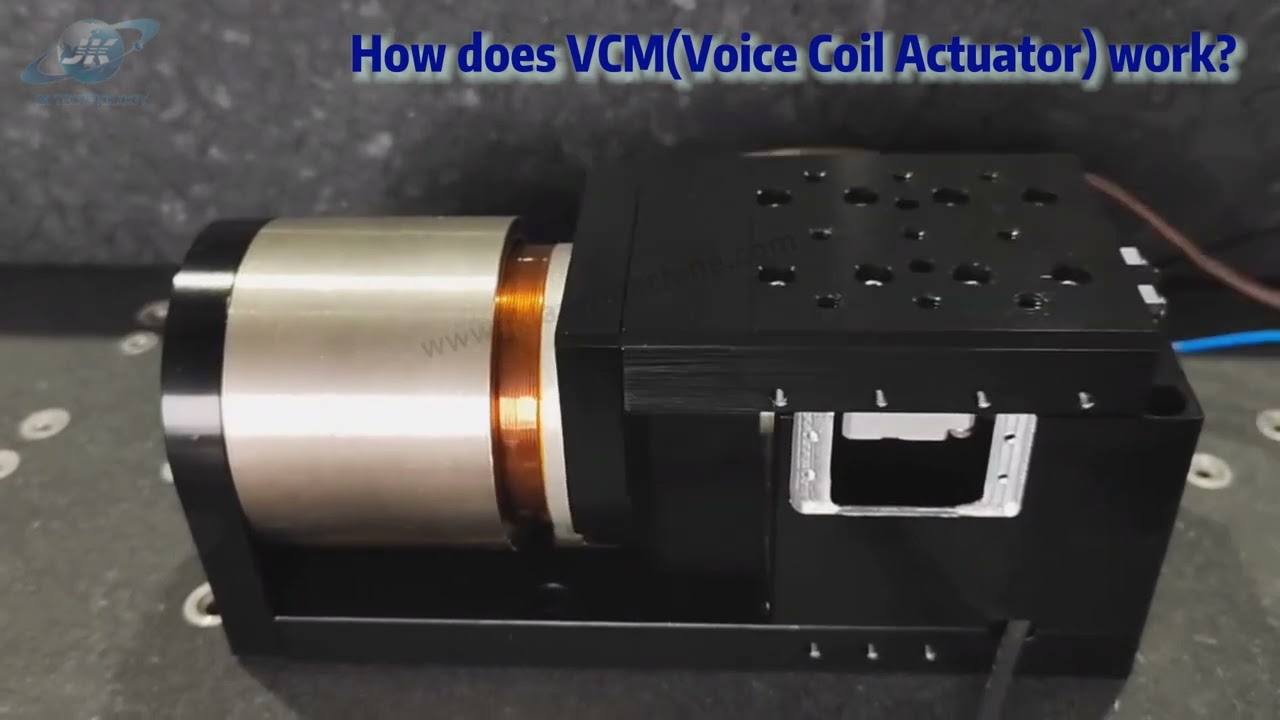
A voice coil actuator is a direct-drive linear motion device that generates force through electromagnetic interaction between a coil and a permanent magnet. Because it eliminates mechanical transmission elements like gears and screws, it delivers fast, smooth, and precise motion. Understanding how a voice coil actuator performs under different conditions is essential for achieving optimal system behavior in demanding applications.
Understanding the Factors That Influence Performance
Before applying optimization techniques, it is important to understand what affects actuator performance. Several physical and electrical variables determine how effectively the system operates.
Key influencing factors include:
- Coil resistance and inductance
- Magnetic field strength
- Moving mass and load inertia
- Power supply stability
- Thermal conditions during operation
Each of these factors interacts to define force output, speed, and positional accuracy.
Improving Thermal Management Efficiency
Heat is one of the most critical factors affecting long-term performance. As current flows through the coil, resistive heating naturally occurs. If not managed properly, this can reduce efficiency and lead to performance drift.
Effective thermal optimization methods include:
- Using heat sinks to dissipate excess heat
- Implementing forced air or liquid cooling systems
- Designing duty cycles to prevent continuous overload
- Monitoring temperature in real time with sensors
Maintaining stable operating temperatures ensures consistent force output and prolongs system lifespan.
Enhancing Control System Precision
The performance of a voice coil system is closely tied to its control architecture. Closed-loop control systems are commonly used to improve accuracy and repeatability.
Optimization strategies include:
- Using high-resolution encoders for feedback
- Implementing PID control tuning for stable response
- Reducing signal noise in control electronics
- Increasing sampling rates for faster response
These improvements help reduce overshoot, oscillation, and positioning errors, especially in high-speed applications.
Reducing Moving Mass for Higher Acceleration
One of the advantages of voice coil systems is their ability to achieve rapid acceleration. This performance can be further enhanced by minimizing moving mass within the system.
Ways to optimize include:
- Using lightweight materials for the moving coil assembly
- Reducing unnecessary mechanical attachments
- Designing compact load interfaces
- Eliminating redundant structural components
Lower inertia directly improves response time and dynamic performance.
Optimizing Magnetic Circuit Design
The magnetic field plays a central role in force generation. A stronger and more uniform magnetic field improves efficiency and linearity.
Optimization approaches include:
- Using high-energy permanent magnets
- Designing optimized magnetic flux paths
- Ensuring consistent air gaps in the magnetic circuit
- Minimizing magnetic leakage losses
A well-designed magnetic circuit increases force output without increasing power consumption.
Improving Power Supply Stability
Stable electrical input is essential for precise motion control. Fluctuations in voltage or current can lead to inconsistent performance and reduced accuracy.
Best practices include:
- Using regulated power supplies
- Implementing current control loops
- Filtering electrical noise and ripple
- Ensuring proper grounding and shielding
A stable power system ensures predictable actuator behavior across all operating conditions.
Minimizing Mechanical Friction and Misalignment
Although a voice coil actuator operates without traditional mechanical transmission systems, external mechanical factors can still affect performance.
Optimization measures include:
- Ensuring precise alignment during installation
- Using low-friction guidance systems
- Avoiding side loading on the actuator
- Maintaining rigid mounting structures
Proper mechanical setup prevents unnecessary energy loss and improves repeatability.
Fine-Tuning for Application-Specific Requirements
Different applications require different performance priorities. Optimization should always be tailored to the specific use case.
For example:
- High-speed inspection systems prioritize acceleration and cycle time
- Medical devices prioritize smooth motion and safety
- Semiconductor equipment prioritizes micron-level accuracy
Adjusting control parameters and mechanical design based on application needs ensures the best balance of speed, precision, and stability.
Conclusion
Optimizing the performance of a voice coil actuator requires a balanced approach that considers thermal management, control system design, magnetic efficiency, and mechanical integration. Because these actuators operate using direct electromagnetic force, even small improvements in system design can significantly enhance overall performance.
By applying structured optimization techniques, engineers can achieve higher precision, faster response times, and improved reliability in demanding industrial and scientific applications.


