


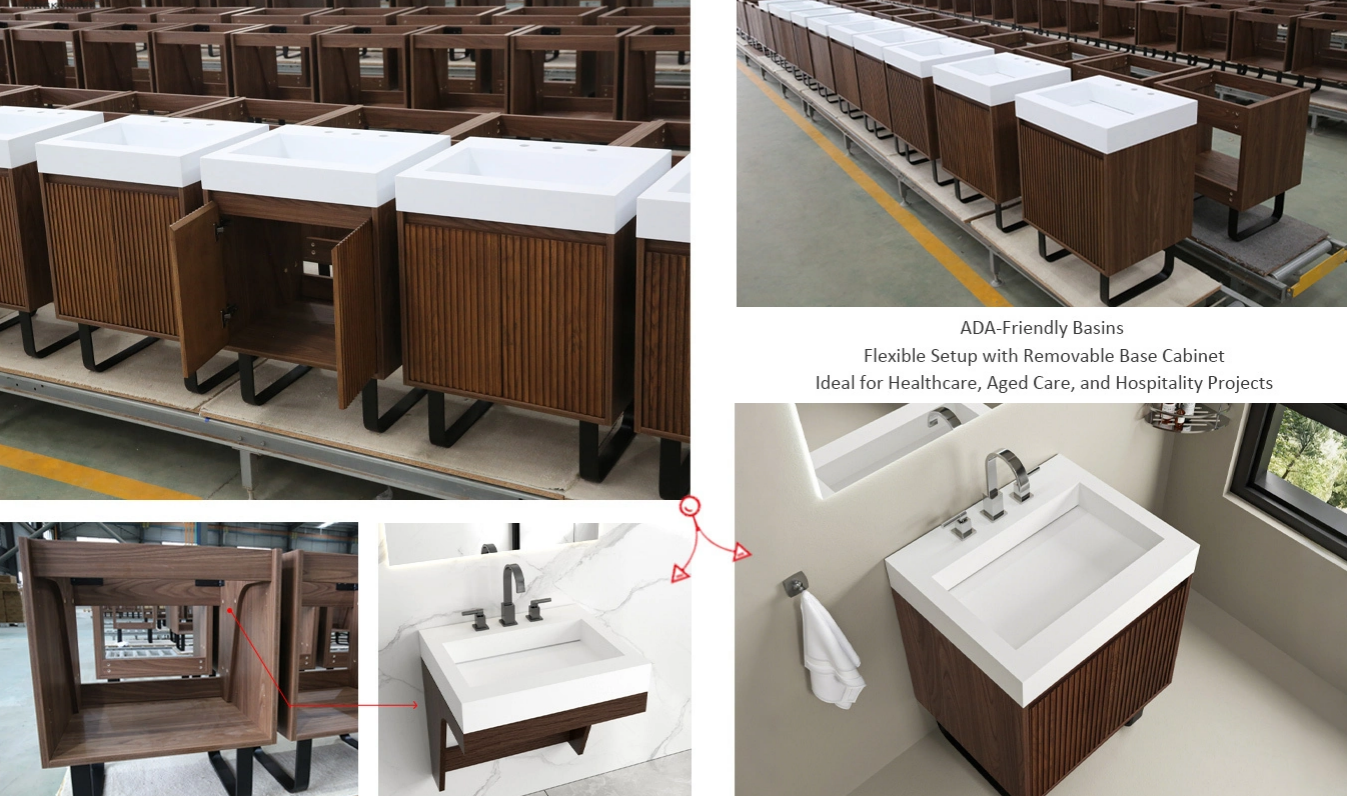
Faucet compatibility is a crucial factor in the performance and accessibility of ADA-compliant sinks. In both residential and commercial restrooms, the faucet must function seamlessly with the sink design while meeting accessibility standards. ADA guidelines require that faucets be easy to operate, requiring minimal force and no tight grasping, pinching, or twisting of the wrist. KingKonree ADA sinks are engineered with these requirements in mind, ensuring compatibility with a wide range of faucet types that enhance both usability and efficiency.
ADA Requirements for Faucet Operation
The Americans with Disabilities Act outlines clear standards for faucet controls. They must be operable with one hand and require no more than five pounds of force to activate. This ensures that individuals with limited hand strength, arthritis, or mobility challenges can use the sink independently. Lever handles, push-type controls, and touchless sensor faucets are among the most common ADA-compliant options.
When integrating ADA Sinks from KingKonree into restroom designs, faucet compatibility is built into the overall structure of the sink. The faucet mounting holes, basin depth, and counter space are carefully designed to accommodate various ADA-approved faucet styles. This compatibility ensures that users benefit from smooth operation, proper reach range, and convenient access without compromising the ergonomic layout of the sink.
Compatible Faucet Types
KingKonree ADA sinks are suitable for multiple faucet configurations, allowing flexibility in design and functionality. Common compatible faucet types include:
- Lever-Operated Faucets: These faucets are simple to use and can be activated with minimal effort. Their elongated handles allow operation with the palm, elbow, or wrist, making them ideal for individuals with limited dexterity.
- Push-Button Faucets: Often used in commercial environments, push-button faucets require light pressure and automatically shut off after a set period, conserving water while remaining accessible.
- Touchless Sensor Faucets: These faucets use infrared sensors to detect hand movement, activating water flow automatically. They reduce physical contact, enhance hygiene, and improve accessibility in high-traffic areas such as hospitals and airports.
- Single-Handle Mixing Faucets: These provide easy temperature and flow control with one lever, ensuring both safety and ease of use.
The sink’s basin design and faucet placement are optimized to prevent splashing and allow sufficient reach, ensuring that each faucet type functions effectively within ADA compliance standards.
Mounting and Installation Considerations
Faucet compatibility extends beyond design to installation requirements. KingKonree ADA sinks are available in wall-mounted, countertop, and integrated counter models, each offering flexibility in faucet placement. Wall-mounted sinks often pair well with wall-mounted faucets, which free up counter space and maintain adequate knee clearance. Countertop models typically support deck-mounted faucets, provided they remain within the required reach range.
Proper installation is essential to maintain compliance. Faucet controls must be positioned within accessible reach limits, and water temperature controls should include anti-scald protection to prevent burns. KingKonree provides detailed specifications and technical guidance to ensure that faucet installation aligns with both safety standards and ergonomic design principles.
Water Efficiency and Hygiene Integration
Modern faucet compatibility also includes water efficiency features. Many ADA-compliant faucets are equipped with aerators or flow restrictors that reduce water consumption without sacrificing performance. Sensor-operated faucets further enhance water conservation by preventing unnecessary running water.
KingKonree ADA sinks are designed to accommodate these advanced faucet technologies, ensuring that accessibility and sustainability go hand in hand. The combination of ergonomic basin design and efficient faucet operation creates a restroom solution that is both environmentally responsible and user-friendly.
Hygiene is another important consideration. Touchless faucets reduce contact points, limiting the spread of bacteria in commercial and healthcare environments. Smooth, non-porous sink surfaces complement these faucets by making cleaning easier and preventing microbial growth. Together, sink and faucet compatibility support a clean and safe restroom experience.
Applications in Residential and Commercial Settings
In residential bathrooms, compatible ADA faucets provide comfort and independence for elderly family members or individuals with mobility limitations. Lever or sensor faucets reduce strain during daily routines, while single-handle mixers allow easy temperature control.
In commercial spaces such as offices, hotels, schools, and healthcare facilities, faucet compatibility ensures that restrooms serve a diverse population efficiently. Durable construction, accessible controls, and hygienic operation contribute to a positive user experience while meeting regulatory requirements.
Conclusion
KingKonree ADA sink faucet compatibility reflects a thoughtful approach to accessibility, safety, and efficiency. By supporting a variety of ADA-compliant faucet types, including lever-operated, push-button, sensor, and single-handle models, these sinks ensure ease of use for individuals with diverse needs. Proper mounting options, ergonomic basin design, and integration with water-saving technologies further enhance functionality.
Incorporating ADA sinks from KingKonree into restroom designs provides reliable compatibility with modern faucet systems, promoting accessibility, hygiene, and long-term durability in both residential and commercial environments.


