


Tree care is demanding work. Between assessing tree health, managing dangerous removals, and keeping clients happy, there is little room for administrative chaos. Yet, for many tree care businesses, the office side of things remains a tangle of whiteboard schedules, lost sticky notes, and endless phone tag. When your crew is 40 feet up in an oak tree, the last thing they need is confusion about the job details or location.
The operational backbone of a successful tree service company isn’t just chainsaws and chippers; it’s the system used to manage them. This is where specialized technology steps in. Arborist scheduling software is designed specifically to handle the unique logistics of the tree care industry, turning a disorganized operation into a streamlined, profitable machine. By centralizing scheduling, dispatching, and resource allocation, this technology allows business owners to focus on growth rather than putting out administrative fires.
What is Arborist Scheduling Software?
At its simplest, arborist scheduling software is a comprehensive digital platform built to manage the day-to-day operations of a tree care business. Unlike generic calendar apps or spreadsheets, these tools are engineered with the specific needs of arborists in mind. They act as a central hub where office staff, sales representatives, and field crews connect.
The primary purpose of this technology is to replace fragmented manual processes with a unified system. It handles everything from the initial customer inquiry to the final invoice. This centralization is critical because tree care operations are complex logistics puzzles. You aren’t just sending a person to a house; you are deploying specialized crews, heavy machinery like bucket trucks and stump grinders, and ensuring safety protocols are met.
By integrating crew scheduling tools, field service management features, and customer relationship management (CRM) into one dashboard, these platforms eliminate the “blind spots” in your business. Office managers can see exactly where crews are, sales reps can generate quotes on-site, and technicians have instant access to work orders. The result is a drastic reduction in wasted time and a significant boost in operational efficiency and customer satisfaction.
Key Features of Arborist Scheduling Software
To truly understand the value of this technology, we need to look under the hood. The best platforms offer a suite of features designed to tackle the specific pain points of tree service professionals.
Smart Scheduling and Dispatching
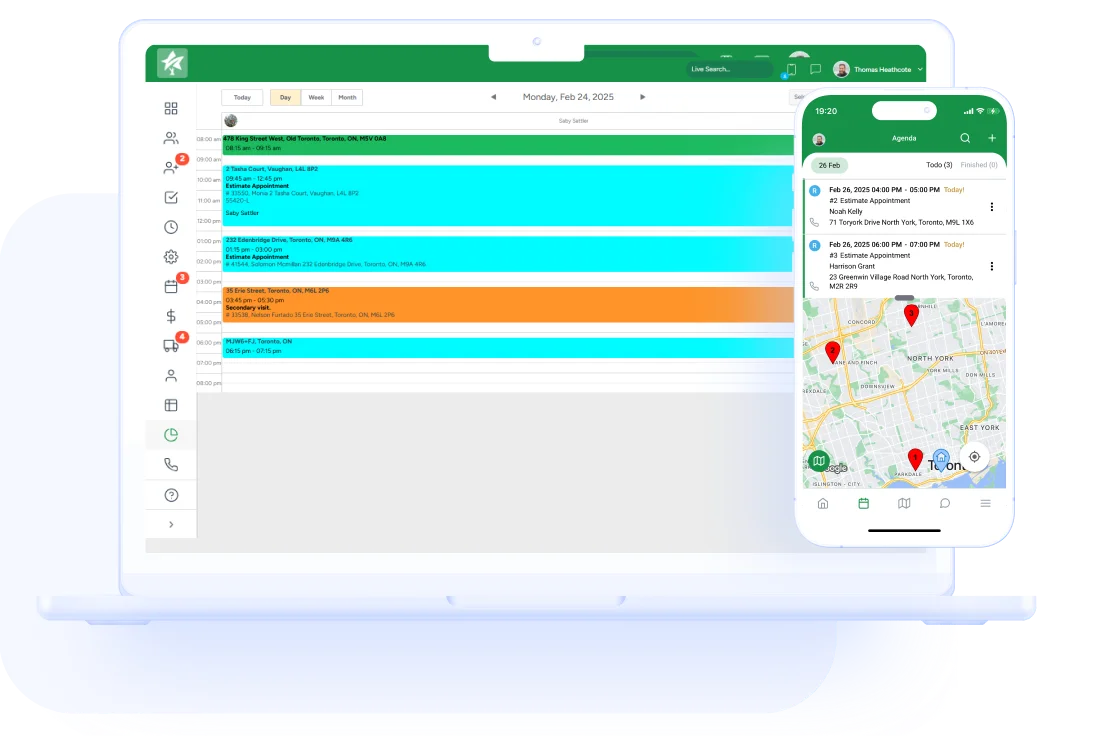
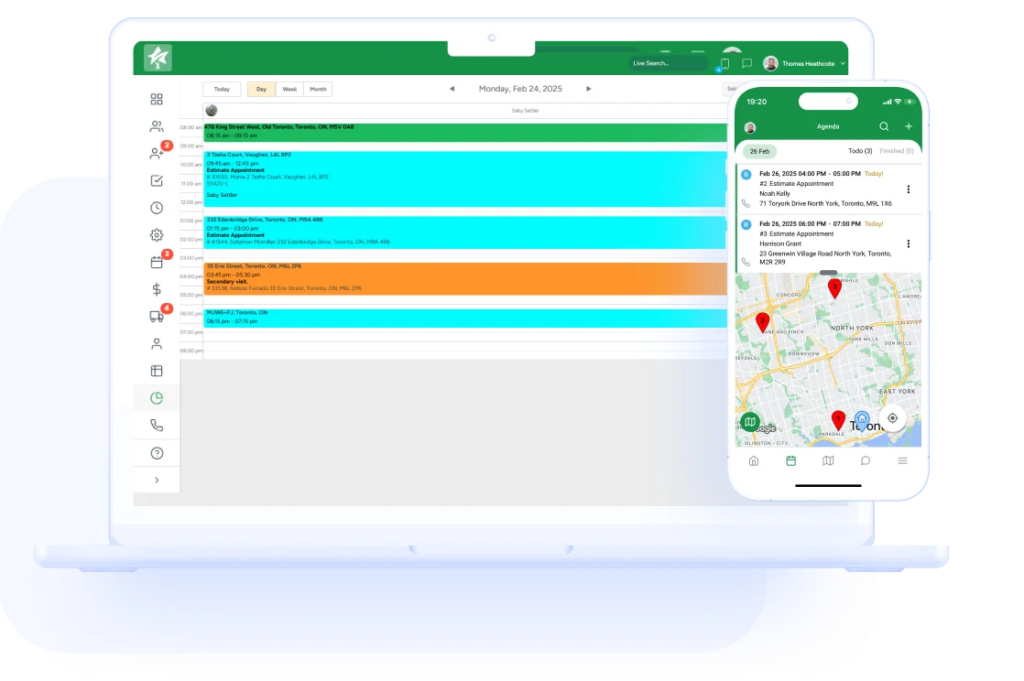
The days of the magnetic whiteboard are numbered. Smart scheduling is the engine that drives modern tree care businesses. This feature allows dispatchers to view the availability of all crews and equipment in a single view. You can drag and drop jobs onto a calendar, ensuring that no technician is double-booked and no equipment is left sitting idle.
Advanced dispatch software often includes route optimization. Instead of crews zigzagging across town, the system calculates the most efficient route between jobs. This reduces fuel consumption and drive time, allowing for more billable hours in a day. Furthermore, real-time updates and GPS tracking mean you always know where your trucks are. If an emergency job pops up, you can instantly identify the nearest crew and reroute them without disrupting the entire day’s schedule.
Crew and Resource Management
Tree work is resource-intensive. Sending a crew to a removal job without a chipper or the right rigging gear is a recipe for lost revenue. Arborist scheduling software excels at resource allocation. When a job is scheduled, you can assign not just the personnel, but also the specific vehicles and equipment required.
This ensures that when a crew arrives on-site, they are fully equipped to complete the task. Additionally, time tracking features allow crews to clock in and out of specific jobs directly from their mobile devices. This provides accurate data on labor costs for each project, helping you understand which jobs are profitable and which ones are dragging down your bottom line.
Proposal and Estimate Creation
Speed wins business. In the tree care industry, the first company to provide a professional quote often gets the job. Estimate software built into these platforms allows arborists to create branded, detailed proposals while still on the client’s property.
Using a tablet or smartphone, you can upload photos of the trees, add specific line items for pruning or removal, and generate a digital proposal instantly. Clients can often review and approve these estimates via email or text message with a single click. This seamless process reduces the friction between the initial consultation and the signed contract, significantly boosting conversion rates.
Invoicing and Payment Processing
Cash flow is the lifeblood of any small business. Integrating digital invoicing into your scheduling platform accelerates the payment process. Once a job is marked complete by the crew, the system can automatically generate an invoice and send it to the client.
Many platforms also support online payment solutions, allowing customers to pay via credit card or ACH transfer immediately. Furthermore, integration with accounting tools like QuickBooks is a standard feature. This synchronization eliminates the need for double data entry, ensuring that your financial records are always accurate and up-to-date without spending hours on manual bookkeeping.
CRM and Client Notifications
Building long-term relationships is easier when you have a dedicated CRM for arborists. This feature creates a digital file for every client, storing their contact details, service history, tree inventory, and communication logs.
Automated notifications take client management a step further. The system can send text or email reminders to clients about upcoming appointments, notify them when a crew is en route, and follow up after the job is done to ensure satisfaction. This level of transparency builds trust and keeps your company top-of-mind for future services.
Benefits of Using Arborist Scheduling Software
Investing in specialized software isn’t just about “going digital”; it’s about unlocking tangible benefits that drive business growth.
Enhanced Operational Efficiency
The most immediate impact of adopting workflow automation is the recovery of lost time. By automating repetitive tasks like appointment reminders, invoice generation, and route planning, you free up your office staff to focus on higher-value tasks. Efficiency tools reduce the manual errors that lead to missed appointments or incorrect billing, ensuring your operation runs smoothly even during the peak season rush.
Improved Customer Satisfaction
Today’s homeowners expect a seamless, “Uber-like” experience. They want to know when you’re coming, they want clear communication, and they want easy payment options. By providing timely updates and transparent service, you elevate the customer experience. A happy customer is not only more likely to hire you again for seasonal maintenance but also more likely to refer you to neighbors and leave positive reviews online.
Increased Profitability
Profit optimization comes from two sources: cutting costs and increasing revenue. Route optimization lowers fuel and vehicle maintenance costs. Better time management ensures you get more jobs done per day. Accurate job costing helps you identify and eliminate underpriced services. Simultaneously, professional digital proposals help you win more high-value jobs. The combination of these factors leads to a healthier bottom line.
Scalability for Growing Businesses
Whether you are running a single truck or a fleet of twenty, scalable software adapts to your needs. As you hire more crews and expand into new territories, the system grows with you. You can add users, track more assets, and manage a larger database of clients without having to overhaul your entire operational structure. This makes enterprise solutions accessible even to growing small businesses.
How to Choose the Best Arborist Scheduling Software
With several options on the market, selecting the right platform requires careful consideration.
- Ease of Use: Field crews need software that is intuitive and simple. If the interface is clunky or difficult to navigate on a smartphone, adoption will be low. Look for a clean, user-friendly design.
- Integration Capabilities: Your new software should play nicely with the tools you already use. Seamless integration with accounting software like QuickBooks is non-negotiable for most businesses.
- Pricing and Scalability: different platforms offer different pricing models—some charge per user, others flat monthly fees. Ensure the pricing structure fits your budget and allows for affordable scaling.
- Customer Support: When technology hiccups, you need help fast. Look for providers known for excellent customer service and robust training resources to help your team get up to speed.
FAQs About Arborist Scheduling Software
What features should I look for in arborist scheduling software?
Prioritize platforms that offer a comprehensive suite: smart scheduling and dispatching, robust CRM, inventory management for trees and equipment, digital estimating, and invoicing. The ability to attach photos and notes to specific jobs is also crucial for tree care.
Is arborist scheduling software suitable for small businesses?
Absolutely. In fact, small businesses often see the biggest ROI because the owner is wearing multiple hats. Automating administrative tasks allows the owner to focus on billable work or sales. Many platforms offer tiered pricing specifically for smaller teams.
Does arborist scheduling software integrate with QuickBooks?
Yes, most reputable platforms offer integration with QuickBooks Online and Desktop. This allows for the automatic syncing of invoices, payments, and customer data, drastically reducing bookkeeping time.
Can arborist scheduling software help with crew management?
Yes. Through mobile apps, you can track crew locations via GPS, track time spent on specific jobs, and ensure crews have the right equipment before they leave the yard. This accountability improves overall team productivity.
Does arborist scheduling software offer mobile app support?
Mobile support is essential. Field crews need access to job details, maps, and the ability to upload photos and signatures from the job site. Ensure the software has a reliable, native app for both iOS and Android.
Is there a free trial available for arborist scheduling software?
Most providers offer a free trial or at least a free demo. It is highly recommended to take advantage of this to test the user interface and ensure the features match your specific workflow before committing.
Case Studies: Success Stories with Arborist Scheduling Software
Consider the case of “Green Canopy Tree Service,” a mid-sized company that struggled with paper-based scheduling. Technicians were frequently driving across town for jobs that could have been grouped together, and invoices were often sent weeks late. After implementing a dedicated software solution, they reduced their weekly drive time by 15% and cut their billing cycle from 14 days to 2 days.
Another example is a small family-owned business that used digital proposal tools to increase their close rate. By delivering professional, photo-rich quotes instantly on-site, they differentiated themselves from competitors who took days to send a generic email estimate. These success stories highlight how the right digital tools can transform a business’s trajectory.
Conclusion
n an industry as competitive and physically demanding as tree care, efficiency is the key to survival and growth. Relying on outdated manual processes is a ceiling that will eventually limit how big your business can grow. Arborist scheduling software breaks that ceiling by streamlining your operations and professionalizing your client interactions. By aligning your field work with modern technology, you are taking the first step toward understanding how businesses can build sustainable growth with a smarter online strategy, securing a more profitable and resilient future for your company.


