


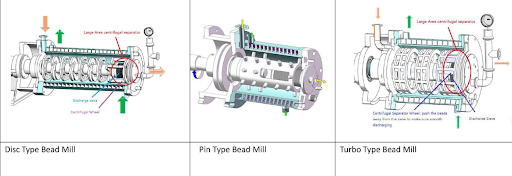
High-performance grinding equipment plays a crucial role in industries such as coatings, pharmaceuticals, chemicals, inks, and advanced materials. The demand for finer particle sizes, improved dispersion, and consistent product quality has pushed manufacturers to continuously refine bead milling technology. Modern systems are engineered not only for efficiency but also for precision, durability, and energy optimization.
In today’s competitive industrial landscape, bead mill manufacturers focus heavily on advanced engineering principles, material science, and process innovation to develop machines that deliver stable performance under continuous operation. Their design approach is centered on achieving optimal particle size reduction while minimizing energy consumption and maintenance requirements. This balance of efficiency and reliability is what defines modern bead milling equipment.
Core Design Principles of High-Performance Bead Mills
The foundation of any bead mill design lies in its ability to generate controlled and efficient grinding energy. Manufacturers carefully engineer the internal chamber, rotor system, and media flow dynamics to ensure consistent particle reduction.
A key principle is energy transfer efficiency. The machine must convert mechanical energy into effective grinding action without unnecessary losses. This is achieved through optimized rotor geometry and carefully selected grinding media that enhance collision efficiency.
Another important principle is flow uniformity. Material must circulate evenly throughout the chamber to ensure all particles are exposed to consistent grinding forces. Poor flow design can lead to uneven particle size distribution and reduced product quality.
Engineering Innovations in Modern Bead Mill Systems
Modern bead mills incorporate several engineering advancements that significantly improve performance and reliability. One of the most important innovations is the development of optimized grinding chambers that reduce dead zones and improve bead movement.
Manufacturers also focus on improving rotor design. High-speed rotors are engineered to generate strong shear forces while maintaining stability and reducing vibration. This ensures smoother operation and longer equipment life.
Additionally, advanced separation systems are integrated to ensure efficient separation of grinding media from the final product. This prevents contamination and maintains consistent output quality across production cycles.
Material Selection and Structural Durability
Durability is a major consideration in bead mill design. Equipment must withstand continuous high-energy operation without performance degradation. For this reason, manufacturers use wear-resistant materials in key components such as chambers, rotors, and seals.
Ceramic, hardened steel, and specialized alloys are commonly used to improve resistance to abrasion and corrosion. These materials extend machine lifespan and reduce maintenance frequency, which is critical for industrial-scale production environments.
Structural rigidity is also important. A stable frame reduces vibration and ensures precise alignment of internal components, which directly impacts grinding efficiency and product consistency.
Performance Optimization Through Precision Control
Modern bead mills are equipped with advanced control systems that allow operators to fine-tune processing conditions. These systems play a vital role in achieving consistent output quality.
Key controllable parameters include:
- Rotor speed for adjusting energy input
- Feed rate for controlling material flow
- Temperature for maintaining product stability
- Grinding time for achieving desired fineness
By optimizing these variables, manufacturers can achieve precise particle size distribution tailored to specific industrial applications.
Customization for Industrial Applications
Different industries require different grinding characteristics, and bead mill manufacturers design equipment with customization in mind. Machines can be adapted based on viscosity, hardness, and required fineness of the material.
For example, pharmaceutical applications require ultra-fine and contamination-free grinding, while coatings and inks demand strong dispersion and color consistency. To meet these needs, manufacturers offer customizable bead sizes, chamber configurations, and cooling systems.
This flexibility ensures that bead mills can be effectively used across a wide range of production environments.
Energy Efficiency and Operational Stability
Energy efficiency is a major focus in modern bead mill design. Manufacturers aim to maximize grinding output while minimizing power consumption. This is achieved through optimized motor systems, improved mechanical design, and reduced internal friction.
Stable operation is equally important. Consistent performance reduces material waste and ensures uniform product quality. Automation systems further enhance stability by maintaining optimal operating conditions throughout production cycles.
Industrial Applications and Practical Benefits
High-performance bead mills are used in a wide range of industries due to their efficiency and versatility. Their ability to produce fine and uniform particle sizes makes them essential in modern manufacturing.
Common applications include:
- Paints and coatings for smooth finishes and durability
- Printing inks for consistent color dispersion
- Pharmaceuticals for stable suspensions and formulations
- Chemical processing for fine particle production
- Battery materials for improved energy storage performance
- Nanomaterial production for advanced applications
Each application benefits from precise control over particle size and distribution.
Conclusion
The design of high-performance grinding equipment is a complex process that combines engineering precision, material science, and process optimization. Bead mill manufacturers continuously innovate to improve efficiency, durability, and product quality while meeting the evolving demands of modern industries.
Through advanced chamber designs, optimized energy systems, and customizable configurations, bead mills have become essential tools in industrial processing. Their ability to deliver consistent, fine, and high-quality output ensures their continued importance in a wide range of manufacturing applications.


