


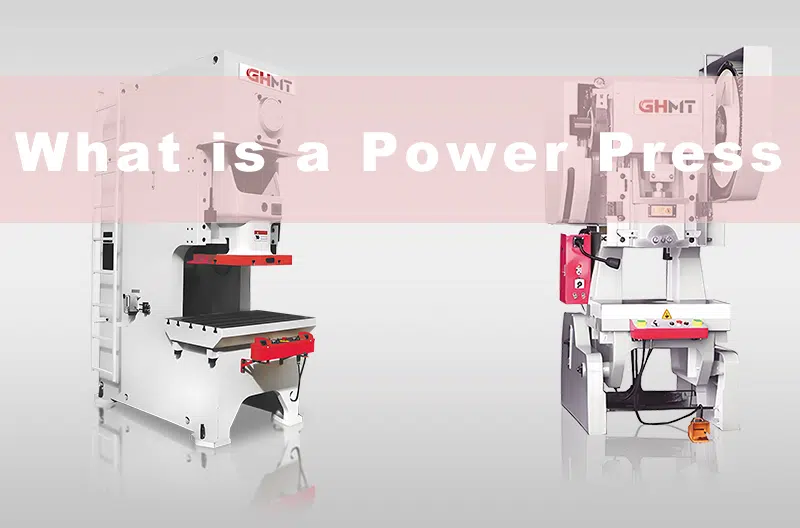
In today’s competitive manufacturing environment, productivity is a key factor that determines success. Press machines play a crucial role in metal forming, stamping, punching, and bending operations. The performance, efficiency, and reliability of these machines directly impact production output and operational costs. Modern press machines are designed to enhance productivity by integrating advanced technology, automation, and precision control systems. These improvements allow manufacturers to meet increasing production demands while maintaining high-quality standards.
A modern Press Machine combines innovative design, automation, and efficient operation to optimize manufacturing processes. Unlike traditional machines, which rely solely on mechanical or hydraulic systems, modern press machines incorporate features such as CNC controls, servo motors, and robotic integration. These enhancements improve cycle times, reduce downtime, and increase operational accuracy, resulting in higher output with minimal waste. By leveraging these technological advancements, manufacturers can achieve greater efficiency and competitiveness in their operations.
Automation for Faster Operations
One of the primary ways modern press machines improve productivity is through automation. Automated feeding systems, robotic part handling, and programmable operations reduce manual intervention, allowing continuous and consistent production. Automation eliminates repetitive tasks, decreases human error, and speeds up the workflow. In high-volume production environments, automated press machines can maintain a steady output rate, improving overall efficiency and reducing labor costs.
Robotic integration also ensures precise positioning of materials, minimizing misalignment and scrap. This precision is particularly important in operations like stamping and punching, where consistent placement affects product quality and reduces the need for rework.
Advanced Control Systems
Modern press machines utilize advanced control systems such as programmable logic controllers (PLCs) and servo technology to manage machine operations. CNC and servo-controlled machines allow operators to program specific stroke lengths, speeds, and forces, ensuring accurate and repeatable results. This level of control reduces production variability and enhances quality consistency across large batches.
Advanced control systems also provide real-time monitoring of machine performance. Operators can track production metrics, detect potential issues, and make adjustments without stopping the machine. This predictive approach minimizes downtime and maintains continuous operation, directly contributing to increased productivity.
Energy Efficiency and Cost Savings
Energy efficiency is another factor that contributes to improved productivity. Modern press machines are designed with energy-saving features, such as variable frequency drives, regenerative braking systems, and optimized hydraulic circuits. These systems reduce power consumption while maintaining performance, lowering operating costs and enhancing overall production efficiency.
Reduced energy usage also minimizes heat generation and wear on components, extending the machine’s operational life and reducing the frequency of maintenance-related downtime. Less downtime means more production hours, which directly increases output and profitability.
Flexibility for Multiple Applications
Modern press machines are highly versatile, capable of handling a wide range of materials, thicknesses, and part geometries. Servo and hybrid presses allow quick adjustments in force, speed, and stroke, making it possible to switch between different operations with minimal setup time. This flexibility is particularly valuable for manufacturers who produce multiple product lines or require short production runs.
The ability to adapt quickly to different production requirements reduces idle time and maximizes the utilization of the machine, contributing to overall productivity gains.
Maintenance and Predictive Monitoring
Improving productivity is not only about faster operation; it also involves reducing unplanned downtime. Modern press machines are equipped with sensors and IoT-enabled monitoring systems that provide predictive maintenance alerts. By detecting wear, alignment issues, or hydraulic inconsistencies early, manufacturers can perform maintenance before a breakdown occurs.
Predictive maintenance reduces emergency repairs, prevents production halts, and ensures that the machine operates at peak efficiency. Proper maintenance scheduling and monitoring extend machine life while maintaining a high level of performance, which is critical for continuous production.
Conclusion
Modern press machines are engineered to enhance productivity through automation, advanced control systems, energy efficiency, flexibility, and predictive maintenance. These machines allow manufacturers to produce high-quality components at faster rates while minimizing downtime and operational costs. A reliable Press Machine integrates innovative features and precision engineering, enabling manufacturers to meet increasing production demands efficiently. By adopting modern press machines, businesses can optimize their operations, improve output, and maintain a competitive advantage in the evolving industrial landscape.


