


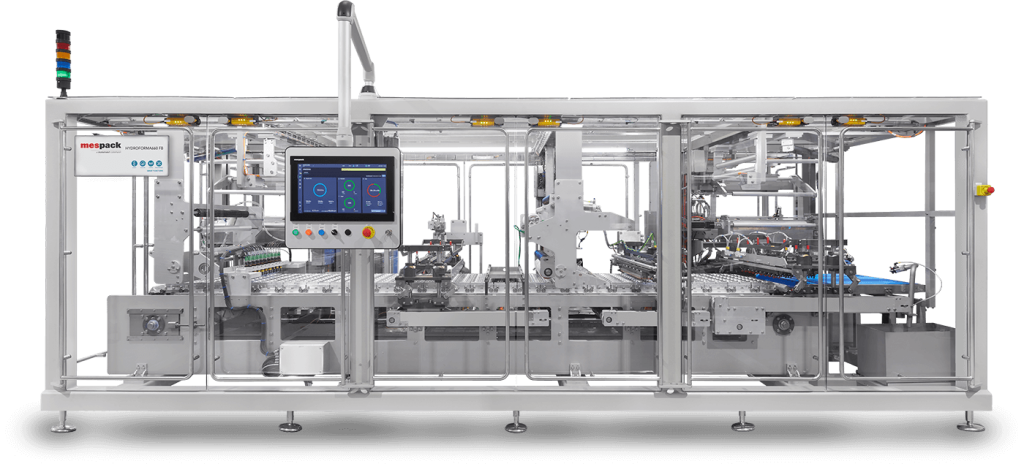
Water soluble film packaging machines have revolutionized industrial packaging across a range of sectors, including detergents, cleaning products, pharmaceuticals, and healthcare. These machines allow products to be packaged in single-dose units using films that dissolve completely in water, providing convenience, safety, and environmental sustainability. In industrial settings, where efficiency, consistency, and hygiene are critical, water soluble film packaging machines offer reliable and precise solutions. Understanding how these machines operate helps manufacturers optimize production while maintaining product quality.
Key Components of Water Soluble Film Packaging Machines
A water soluble film packaging machine is composed of several integrated systems that work together to ensure accurate, high-speed packaging. The primary components include the film feeding system, forming unit, filling unit, sealing and cutting mechanisms, and control systems.
The film feeding system unwinds the water soluble film from rolls while maintaining tension and alignment to prevent tearing or wrinkling. The forming unit shapes the film into pouches, capsules, or sachets, depending on the product specifications. The filling unit dispenses precise amounts of liquid, powder, or gel into the formed packages. Finally, the sealing and cutting units create leak-proof seals and separate individual packages. Automated control systems, often connected to sensors and software, monitor the entire process to ensure consistent output and quality.
Step-by-Step Industrial Packaging Process
The packaging process begins with the controlled feeding of water soluble film into the machine. Rollers and tension controls ensure the film moves smoothly without deformation. The forming unit then molds the film into the desired package shape, whether it is a single-dose pouch, pod, or sachet. This step is crucial for achieving uniform size and structure, which is essential for automated filling and sealing.
Next, the product is precisely filled into the formed film using dosing mechanisms suitable for the type of product. Liquids are typically dispensed with volumetric or flow-controlled pumps, powders with auger or screw fillers, and gels using piston or positive displacement pumps. Accurate dosing ensures that each unit contains the intended quantity, which is especially important in industrial applications where overfilling or underfilling can lead to wastage or performance issues.
In the middle of this sequence, a high-quality Water Soluble Film Packaging Machine integrates automated sealing and cutting processes. Heat sealing or ultrasonic sealing techniques create strong, leak-proof seals without damaging the delicate film. Cutting units then separate the packages while maintaining consistent size and integrity. Sensors continuously monitor film tension, fill volume, and sealing temperature to ensure every unit meets strict industrial standards.
Applications in Industrial Packaging
Water soluble film packaging machines are widely used in industries that require precise and safe packaging solutions. In the detergent and cleaning industry, these machines produce laundry pods, dishwasher capsules, and chemical packets. Single-dose packaging reduces handling risks, ensures consistent product application, and enhances user convenience.
Pharmaceutical and healthcare industries also rely on these machines to package powders, gels, and liquids in single-dose, sterile units. Hospitals, laboratories, and clinics benefit from accurate, hygienic packaging that minimizes contamination and maintains regulatory compliance. Industrial chemical applications also utilize water soluble film packaging to provide pre-measured doses for safety and efficiency.
Benefits for Industrial Packaging
Water soluble film packaging machines offer several advantages in industrial settings. First, they improve production efficiency by automating repetitive tasks, reducing manual labor, and maintaining high-speed operation. Multi-lane configurations allow multiple units to be packaged simultaneously, increasing throughput without requiring additional floor space.
Second, these machines enhance product consistency. Automated dosing, sealing, and cutting processes ensure uniform package size, weight, and integrity, which is critical for both performance and regulatory compliance. Third, they improve hygiene and safety. Minimal human contact reduces contamination risks, while enclosed operating areas and easy-to-clean components maintain sanitary conditions.
Additionally, water soluble film packaging supports sustainability goals. The films dissolve completely in water, eliminating packaging waste and reducing environmental impact. Efficient machine designs also optimize material use, further contributing to eco-friendly production.
Maintenance and Operational Considerations
Maintaining a water soluble film packaging machine is essential for long-term reliability and consistent output. Regular cleaning of rollers, molds, and sealing components prevents residue buildup and contamination. Tension and alignment checks, calibration of dosing systems, and monitoring environmental conditions such as humidity and temperature are critical because water soluble films are highly sensitive to moisture. Proper training for operators ensures safe handling of films, efficient machine operation, and minimized downtime.
Conclusion
Water soluble film packaging machines play a vital role in modern industrial packaging by combining efficiency, precision, hygiene, and sustainability. Through automated film feeding, forming, filling, sealing, and cutting, these machines produce uniform single-dose packages for detergents, chemicals, pharmaceuticals, and healthcare products. Their ability to maintain accuracy and consistency at high speeds makes them indispensable in industrial production lines. With proper maintenance and operator training, water soluble film packaging machines ensure reliable, high-quality packaging while supporting environmental and operational goals.


