


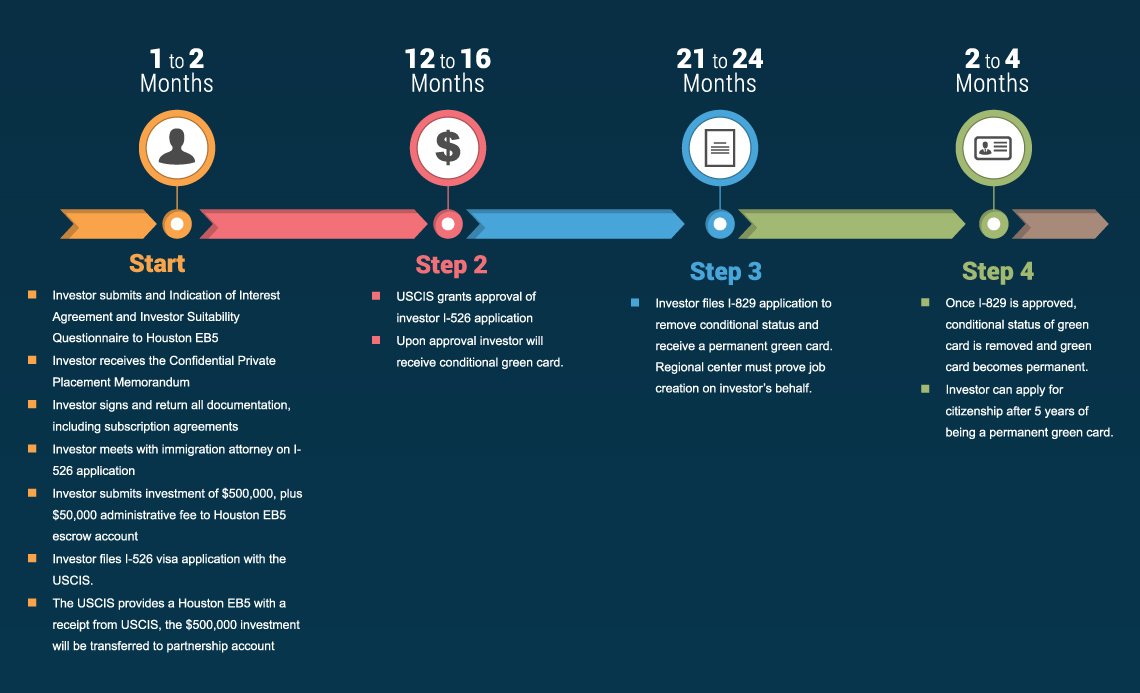
The EB-5 Immigrant Investor Program offers a direct path to a U.S. Green Card for foreign nationals who invest in a job-creating American enterprise. While the benefits are clear, understanding the process from start to finish is crucial for any potential investor. The journey involves several key stages, each with its own set of requirements and processing durations.
Navigating this path requires a clear understanding of the various petitions, processing steps, and potential hurdles. This guide will break down each phase of the EB-5 journey, explain the factors that influence the overall EB5 timeline, and provide insights on how to streamline your application process. From initial investment to receiving your permanent Green Card, we will cover everything you need to know.
What is the EB-5 Visa Program?
The EB-5 Immigrant Investor Program was created by the U.S. Congress in 1990 to stimulate the U.S. economy through job creation and capital investment by foreign investors. In exchange for a significant investment in a new commercial enterprise that creates at least 10 full-time jobs for U.S. workers, investors and their eligible family members (spouse and unmarried children under 21) can obtain a Green Card.
The program’s primary benefit is the opportunity to gain permanent residency in the United States, which allows investors to live, work, and study anywhere in the country. Green Card holders also have a pathway to U.S. citizenship.
To be eligible, an investor must make a minimum capital investment of $1,050,000. This amount is reduced to $800,000 if the investment is made in a Targeted Employment Area (TEA), which is either a rural area or an area with high unemployment. The investor must also prove that the investment funds were obtained from a lawful source.
Key Stages of the Detailed EB5 Timeline
The EB-5 visa process is a multi-step journey that can span several years. Understanding each stage helps manage expectations and ensures a smoother application experience. Here’s a detailed breakdown of the complete EB5 timeline.
2.1. Project Selection and Investment
The first step is to choose a qualifying EB-5 project. This requires thorough due diligence to assess the project’s financial viability and its compliance with USCIS requirements. Most investors choose to invest through a designated Regional Center, which manages the project and job creation aspects.
Once a project is selected, you must prove you are an accredited investor. This typically involves providing a letter from a qualified professional certifying that you meet specific income or net worth criteria. For investors managing global assets, particularly in Southeast Asia, leveraging acomprehensive guide to Singapore accounting services can be an essential resource for organizing the transparent financial records and tax compliance data that USCIS demands during this initial phase. After verification, you will sign the project’s subscription agreement and transfer your investment capital into an escrow account.
2.2. Filing the I-526E Petition
With the investment made, the next step is to file Form I-526E, Immigrant Petition by Regional Center Investor, with U.S. Citizenship and Immigration Services (USCIS). (Investors pursuing a direct investment file Form I-526). This petition demonstrates that you have made the required investment and that your funds were legally sourced. Your immigration attorney will compile the necessary documentation, including financial records, tax returns, and business documents, to create a comprehensive source of funds report.
The processing time for an I-526E petition can vary. Thanks to the EB-5 Reform and Integrity Act of 2022, petitions for projects in rural TEAs are given priority processing, often leading to approvals in under a year.
2.3. Adjustment of Status or Consular Processing
Upon I-526E approval, the next step depends on your physical location.
- Adjustment of Status: If you are already in the U.S. on a valid non-immigrant visa, you can file Form I-485 to adjust your status to that of a conditional permanent resident. A major benefit introduced by the Reform and Integrity Act is concurrent filing, which allows you to file your I-485 at the same time as your I-526E petition. This allows you to apply for work and travel permits, enabling you to live and work freely in the U.S. while your petitions are pending.
- Consular Processing: If you are outside the U.S., your case will be transferred to the National Visa Center (NVC). You will file Form DS-260 and attend an interview at a U.S. embassy or consulate in your home country. This process typically takes about six to twelve months.
2.4. Conditional Green Card Issuance
Once your adjustment of status or consular processing is approved, you and your family will receive a conditional Green Card, which is valid for two years. This card grants you the same rights as a permanent Green Card holder. During this two-year period, you must maintain your residency in the U.S. and adhere to all immigration laws.
2.5. Filing the I-829 Petition
The final step in the immigration process is to remove the conditions on your residency. Within the 90-day window before your conditional Green Card expires, you must file Form I-829, Petition by Investor to Remove Conditions on Permanent Resident Status. This petition proves to USCIS that you sustained your investment and that the required 10 jobs were created. The Regional Center will provide the necessary evidence regarding job creation for you to submit with your petition. I-829 processing times are lengthy, but USCIS will issue a receipt that automatically extends your conditional status while the petition is under review.
2.6. Permanent Residency and Citizenship
After your I-829 petition is approved, the conditions are removed, and you will receive a permanent 10-year Green Card. You are now a lawful permanent resident of the United States. After maintaining permanent residency for five years (including the two years of conditional residency), you may be eligible to apply for U.S. citizenship through the naturalization process.
Factors That Influence the EB-5 Timeline
Several variables can significantly impact how long your EB-5 journey takes.
- Country of Birth: The U.S. government allocates a limited number of EB-5 visas per country each year. Historically, investors from high-demand countries like China and India have faced visa retrogression, resulting in long waits. However, the Reform and Integrity Act created set-aside visa categories for TEA projects, which are currently “current” for all nationalities.
- Application Quality: A well-prepared and thoroughly documented petition can prevent delays. Incomplete or inconsistent applications often receive a Request for Evidence (RFE) or a Notice of Intent to Deny (NOID) from USCIS, which can add months to your processing time.
- USCIS Workload: USCIS processing times fluctuate based on the volume of applications, staffing levels, and policy changes.
- The EB-5 Reform and Integrity Act of 2022: This law introduced major changes, including priority processing for rural projects and concurrent filing, which have significantly accelerated the process for many new investors.
Common Challenges and Delays in the Process
Even with careful planning, delays can occur. Common hurdles include:
- Requests for Evidence (RFEs): These are issued when a USCIS officer needs more information to make a decision. A thorough source of funds report is the best way to avoid an RFE.
- Visa Retrogression: As mentioned, applicants from countries with high demand may have to wait for a visa to become available, even after their I-526E is approved. Investing in a set-aside category is the best strategy to bypass this issue.
- Documentation Gaps: Missing documents, poor translations, or inconsistent financial records are common causes for delay.
- Consular Processing Delays: The workload at individual U.S. consulates can vary, sometimes leading to longer waits for interview scheduling.
How to Expedite Your EB5 Timeline
While you can’t control USCIS processing speeds, you can take steps to position your application for the fastest possible adjudication.
- Choose a Rural TEA Project: These projects receive priority processing from USCIS and have a dedicated pool of set-aside visas, making them the fastest option for investors from all countries.
- Ensure Complete Documentation: Work with an experienced immigration attorney to prepare a flawless source of funds report and ensure every part of your petition is accurate and complete.
- Leverage Set-Aside Visas: By investing in a TEA project (rural or high unemployment), you tap into reserved visa numbers, avoiding the backlogs affecting the unreserved category.
FAQs About the EB5 Timeline
Why do EB-5 timelines vary so much between applicants?
Timelines differ based on the applicant’s country of birth, the chosen project category (rural vs. urban), the quality of the petition, and whether they are eligible for concurrent filing.
What is the difference between I-526 and I-526E petitions?
Form I-526E is used by investors in a Regional Center project, while Form I-526 is for those making a direct investment into their own business. The vast majority of investors use Form I-526E.
Can I work or travel while waiting for my Green Card?
If you are in the U.S. and file an I-485 application for adjustment of status, you can also apply for an Employment Authorization Document (EAD) and an Advance Parole travel document.
What happens if my child ages out during the EB-5 process?
The Child Status Protection Act (CSPA) may protect your child from aging out. The ability to file an I-485 concurrently with the I-526E petition has also become a powerful tool to “lock in” a child’s age.
Is there premium processing available for EB-5 cases?
No, standard premium processing is not available for EB-5 petitions. However, rural projects receive “priority processing,” which serves a similar function by expediting adjudication.
Conclusion
The journey to a U.S. Green Card through the EB-5 program is a detailed and multi-stage process. While the complete EB5 timeline can seem long, recent legislative changes have created new, faster pathways for investors. By understanding each step, choosing the right project, and working with a team of experienced professionals, you can navigate the process efficiently.
With careful planning and strategic decision-making, you can confidently embark on your EB-5 journey and achieve your goal of becoming a U.S. permanent resident.


